
Last updated October 16, 2026
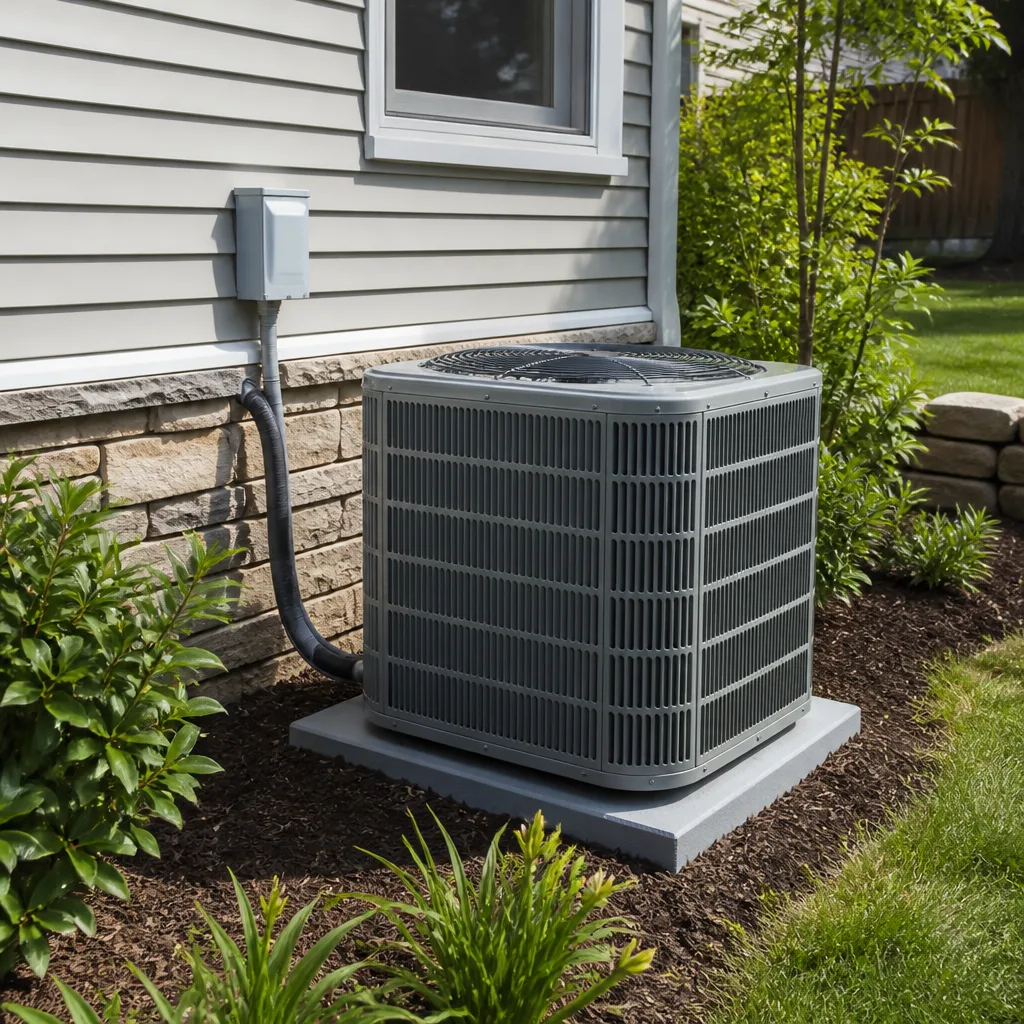 AC repair
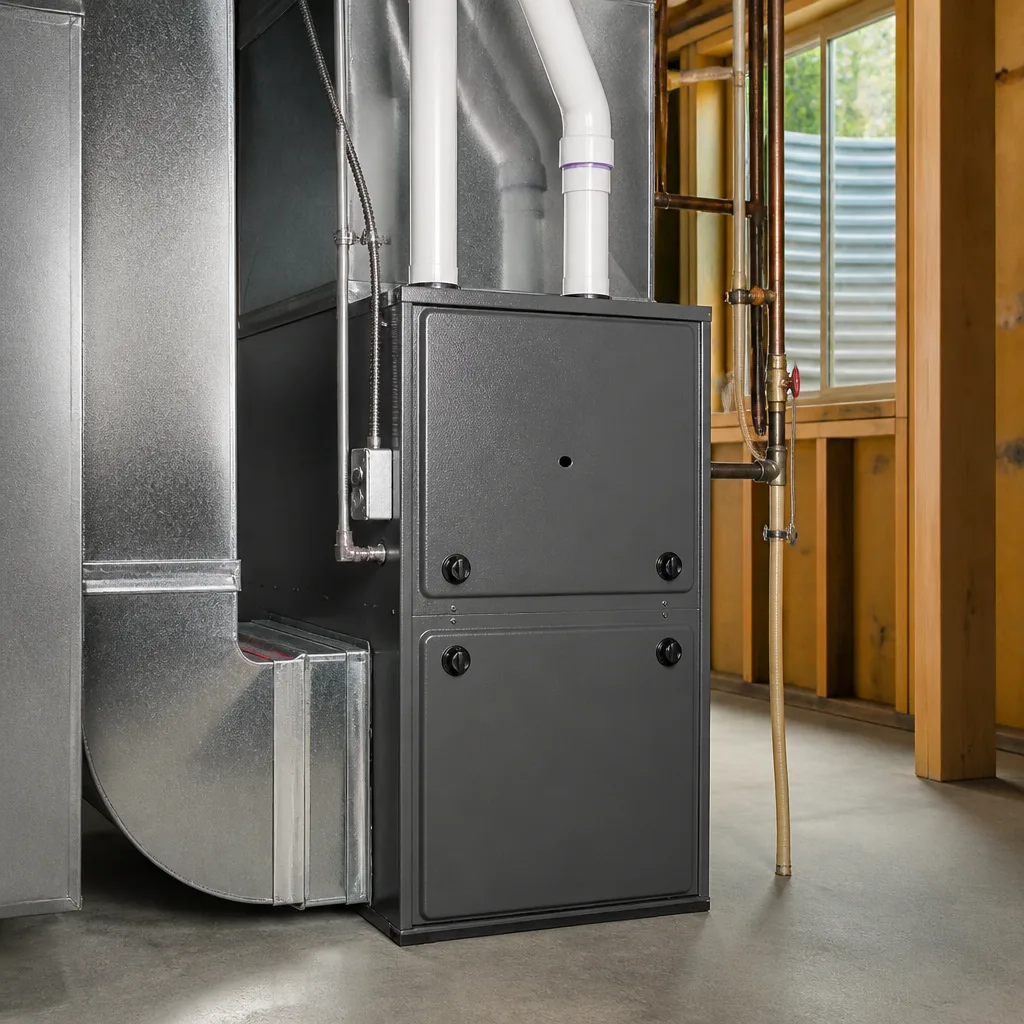 Furnace & heating
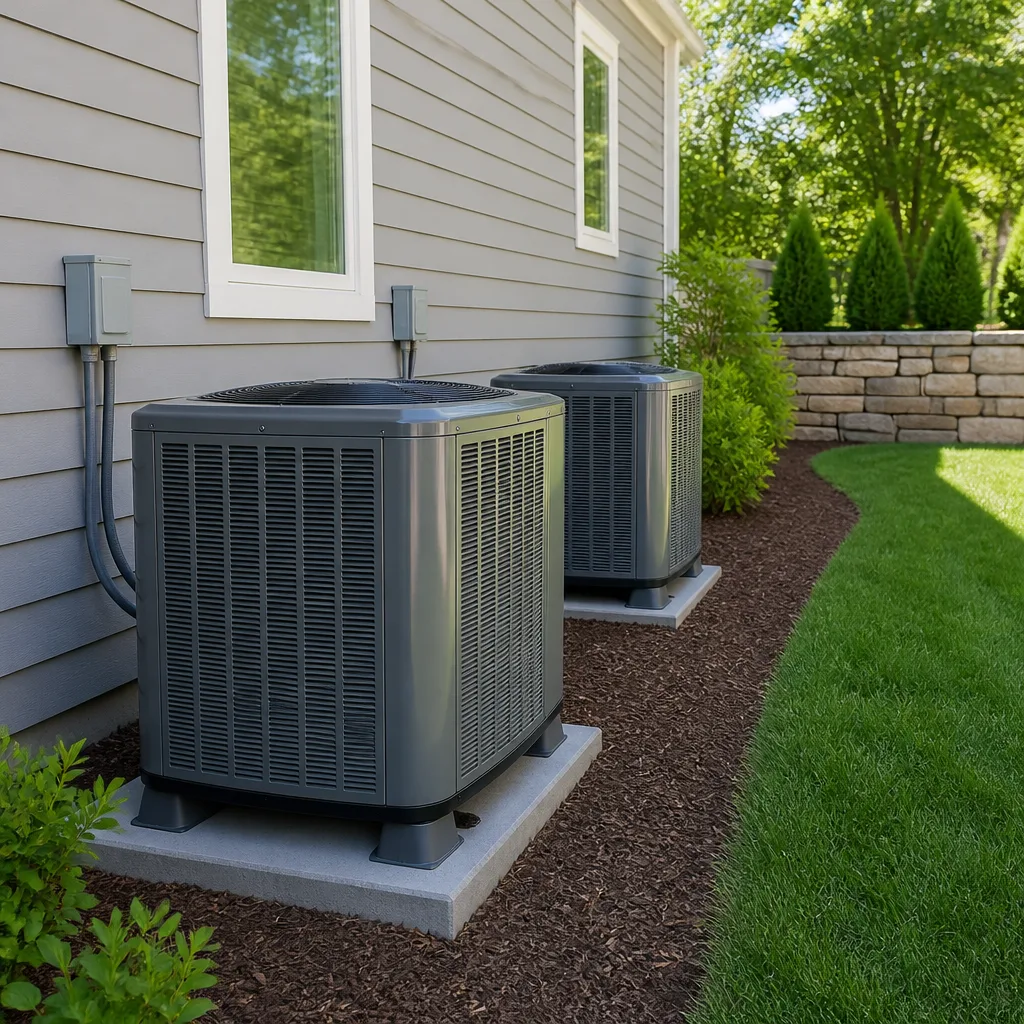 Heat pumps
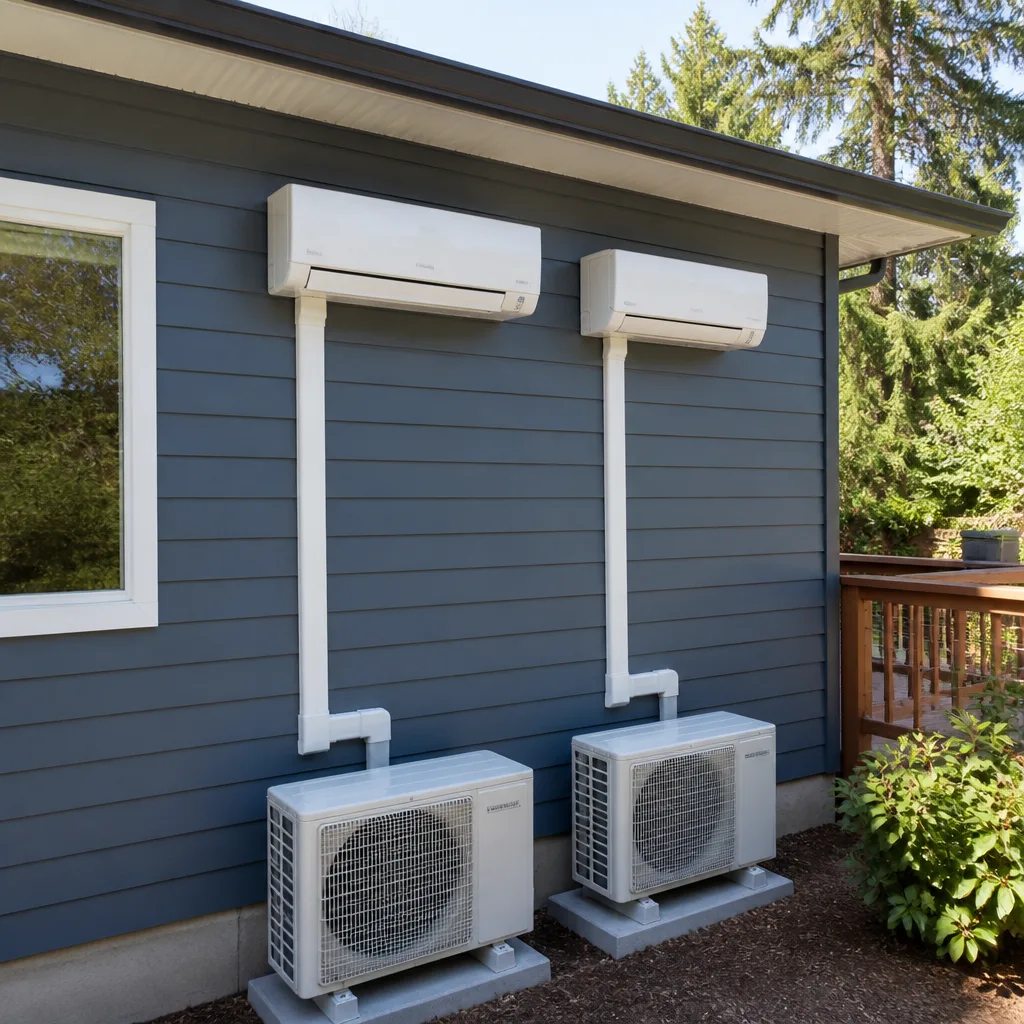 Ductless mini splits
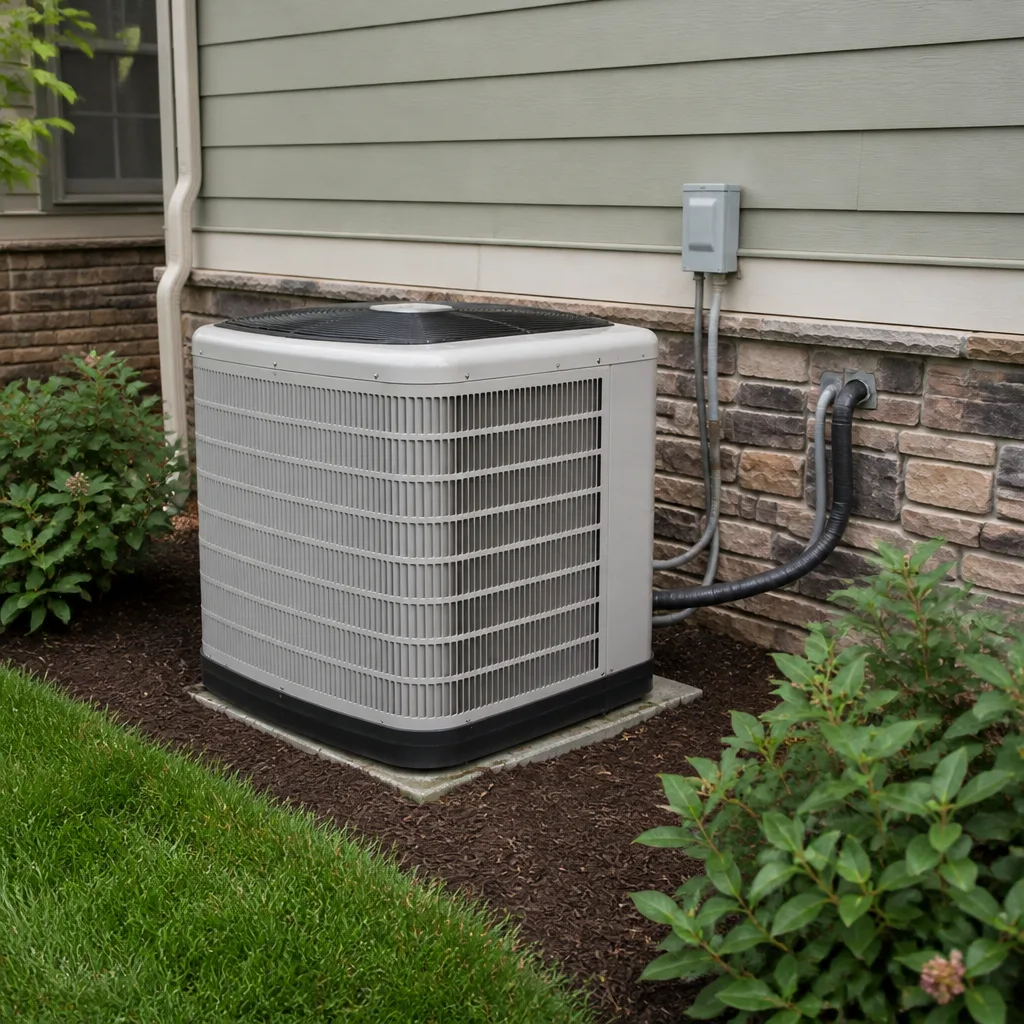 Carrier
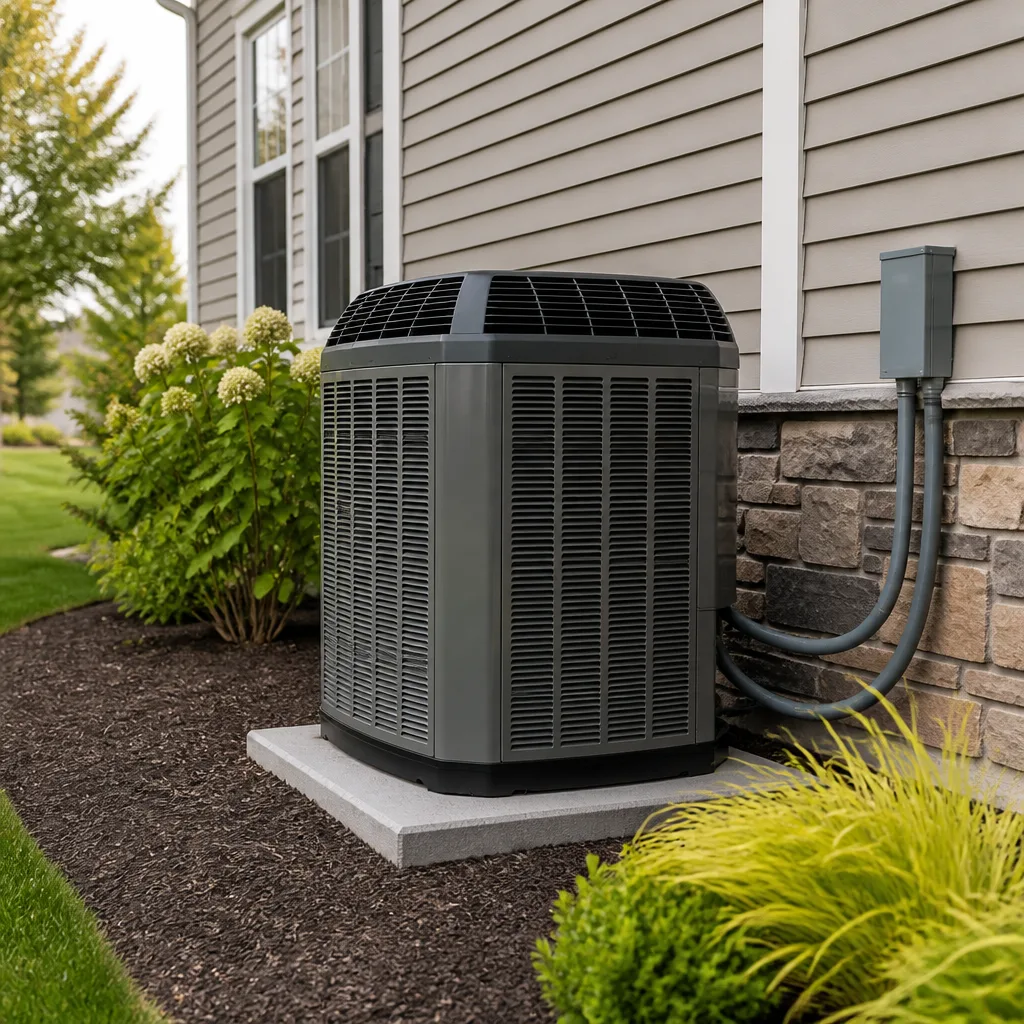 Trane
Trane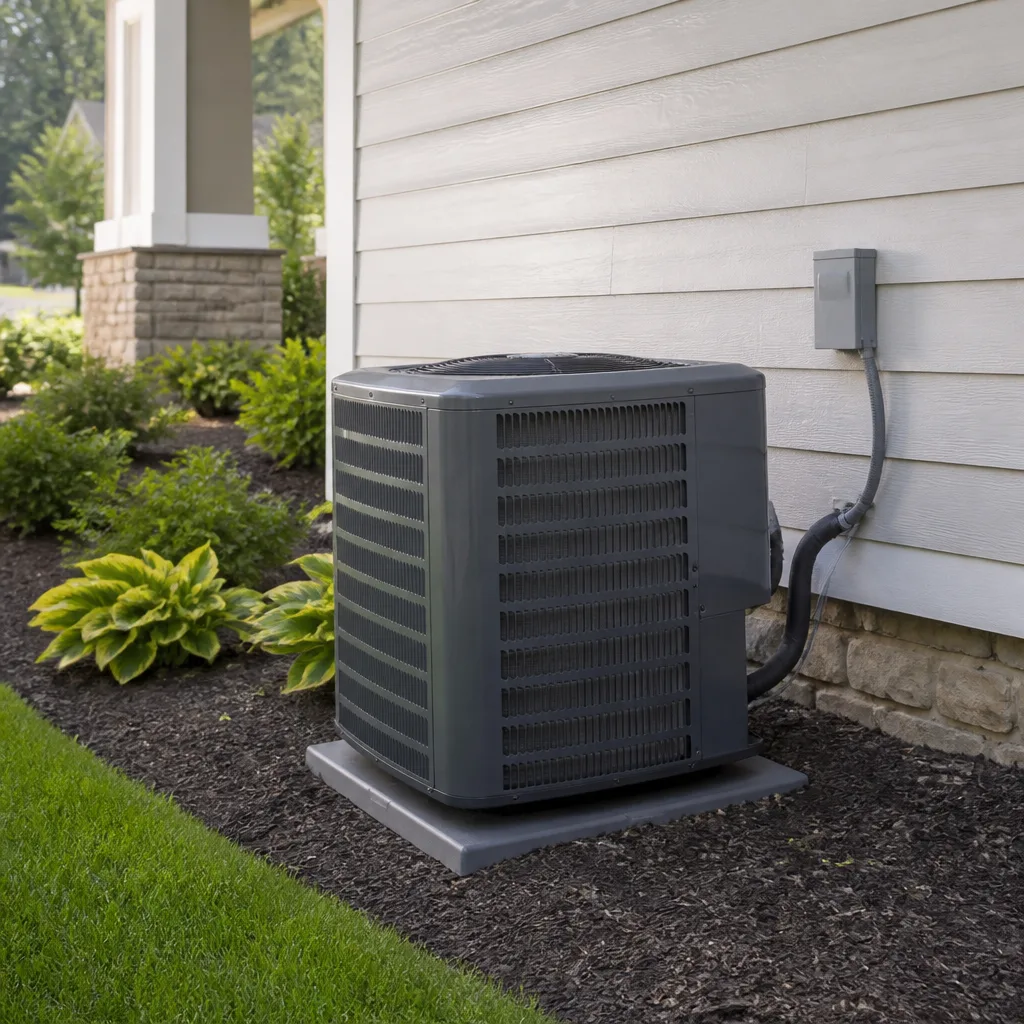 Goodman
Seasonal tune-up and full diagnostic on your Carrier, Trane, or Goodman system - readings shown to you before any repair is proposed
Diagnosis first, numbers second - you approve the repair price before a single part goes in.
Get your free estimateSeasonal HVAC Care for Henderson: Year-Round Homeowner’s Guide
Henderson doesn’t really do “spring.” We get about six weeks of pleasant weather between February’s chill and the first 100°F day, which usually lands in late April or early May. That compressed shoulder season is why a generic four-season HVAC calendar fails here. This guide walks through The Complete Guide to HVAC in Henderson, covering the month-by-month care schedule that actually matches Henderson’s temperature curve, what the monsoon season does to condensate drainage, how to program a thermostat when overnight lows hit 40°F and afternoon highs hit 85°F on the same day, and what a twice-yearly professional visit costs compared to the emergency calls it prevents.
Styles & brands we work with
Quick Answer
Seasonal HVAC care in Henderson works best when scheduled around two key windows: a full system check in late March or early April before the first heat wave, and a furnace and heat strip check in October before nighttime temperatures dip into the 40s. Between those visits, homeowners should change air filters monthly during peak summer, clear condensate drain lines during monsoon season, and program thermostats with separate day and night setbacks to match Henderson’s wide daily temperature swings. See our AC Repair Maintenance Checklist for Henderson Homeowners for the full task list.
Table of Contents
- January: The Three Cold Weeks Henderson Actually Gets
- February – March: The Six-Week Spring Window
- April – May: First Heat Wave and the Case for Pre-Season Service
- June – August: Peak Cooling, Monsoon Moisture, and Filter Discipline
- September: Post-Monsoon Drainage and Coil Care
- October: The October Furnace Check Most Henderson Homes Skip
- November – December: Shoulder Month Thermostat Strategy
- Why Twice-Yearly Service Beats the Annual Tune-Up Model
- Common Mistakes to Avoid
- When to Call a Professional
- Frequently Asked Questions
- The Bottom Line
January: The Three Cold Weeks Henderson Actually Gets
Henderson’s winter is mild by national standards, but homeowners who’ve lived here a few years know the pattern. Roughly three weeks in January bring overnight lows in the low 30s, with daytime highs barely cracking 50°F. For a heat pump or furnace that hasn’t run in real heating mode since the previous winter, that’s when problems surface. The most common January call we see in Henderson is a heat pump that runs constantly but can’t reach the set temperature, usually because the auxiliary heat strips failed months earlier and nobody noticed during the mild December weather.
Here’s what belongs on a January homeowner checklist:
- Run the heat for 20 minutes and confirm warm air, not lukewarm air, comes from every vent.
- Listen for a clicking sound when the thermostat calls for heat. A persistent click without the system starting often points to a failing contactor or sequencer.
- Check the outdoor unit. If it’s iced over on a 45°F day, that’s a defrost cycle problem, not normal winter operation.
- Replace the air filter. Dust from holiday decorations and closed windows means heavier indoor particulate load.
For Henderson homes with gas furnaces, January is also when carbon monoxide detectors earn their keep. The National Fire Protection Association recommends testing CO detectors monthly during heating season. A furnace that’s been dormant since March can develop cracked heat exchanger symptoms that only show under load. If a detector goes off or you smell gas, leave the house and call the gas company immediately. That’s not a DIY moment.
One January reality in Henderson that surprises newcomers: humidity drops to single digits some weeks. That dry air makes the house feel colder than the thermostat reads. Running a whole-house humidifier, if your system has one, or simply setting the fan to “On” for a few hours a day can distribute air and reduce that bone-dry feeling without cranking the heat.
February – March: The Six-Week Spring Window
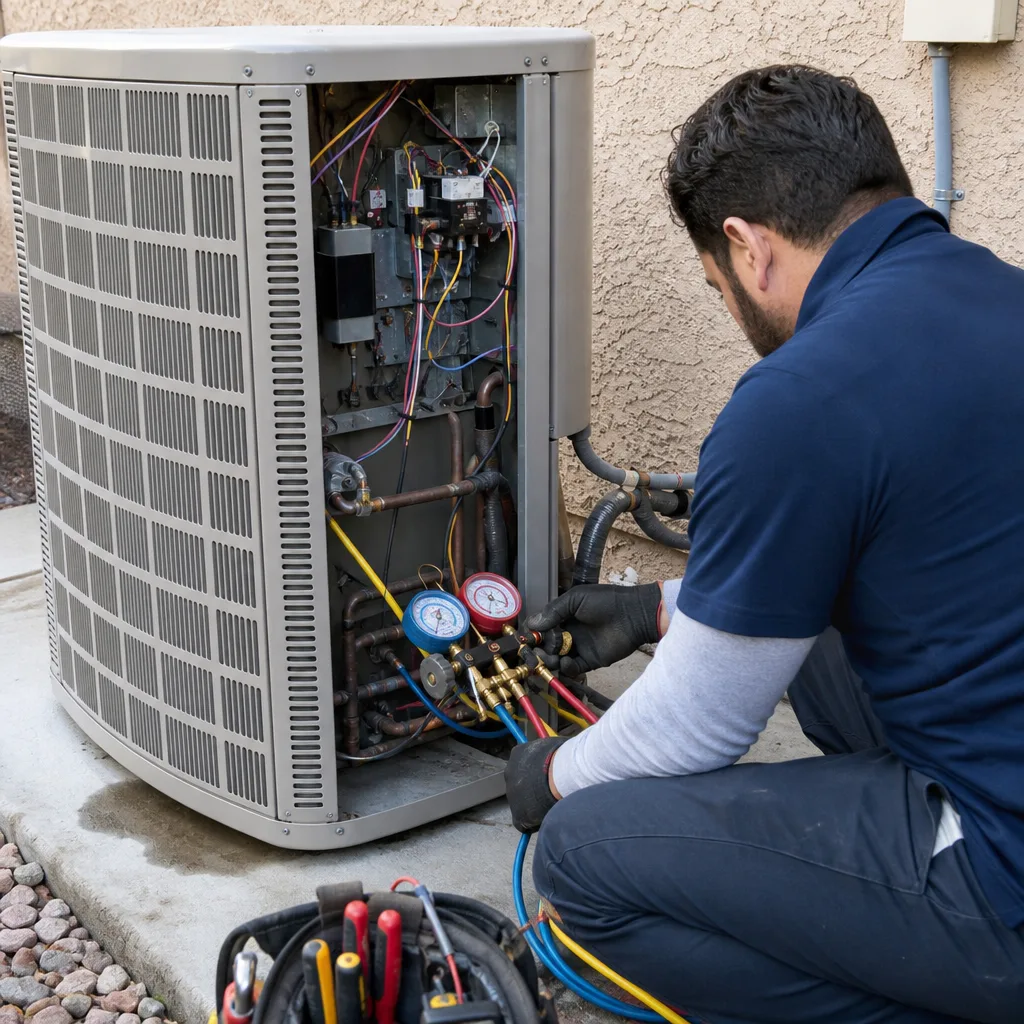
Henderson’s transitional period arrives in February. Daytime highs climb into the 60s and 70s, nighttime lows still hover in the 40s, and for about six weeks the HVAC system does light work in both directions. This is the window where smart Henderson homeowners schedule pre-season cooling maintenance, and here’s the counterintuitive part: the best time to service your AC in Henderson is while you can still comfortably live without it.
Here’s what that March pre-season visit should cover, step by step:
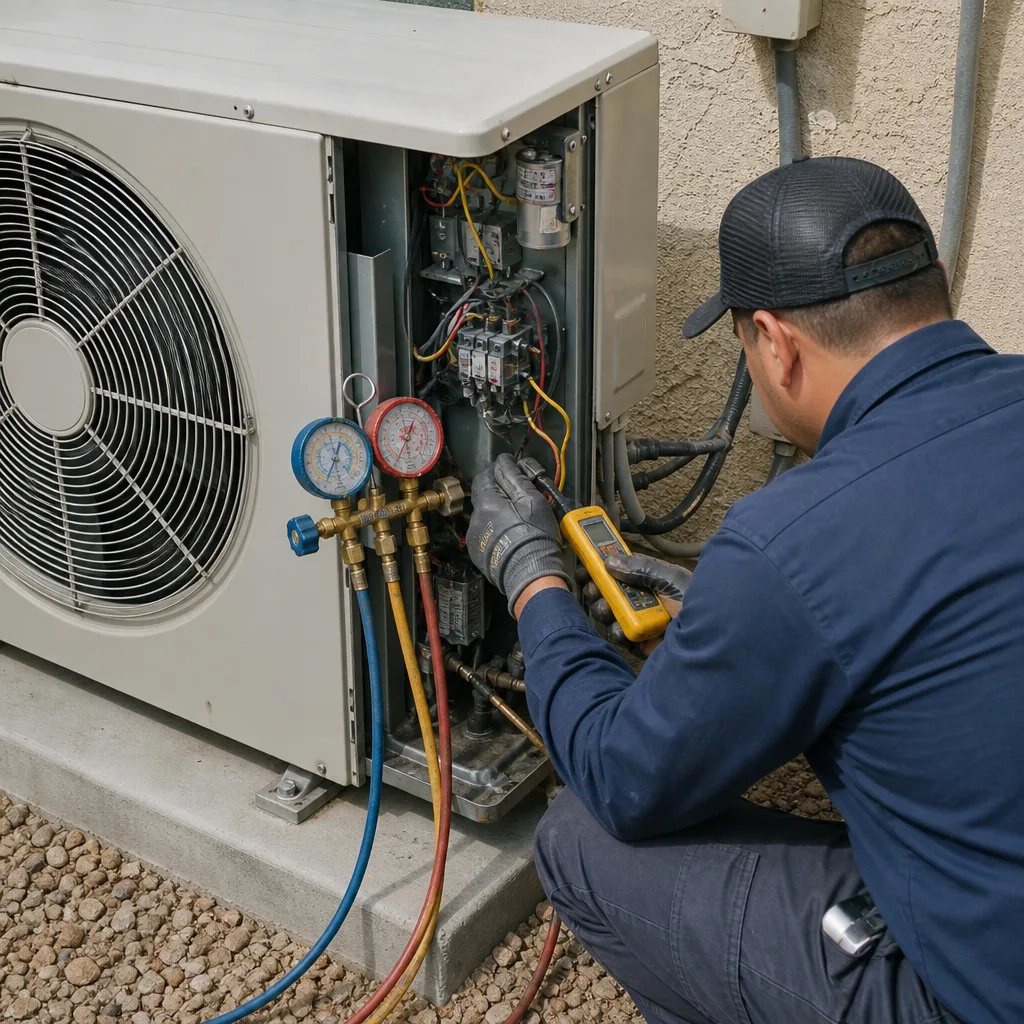
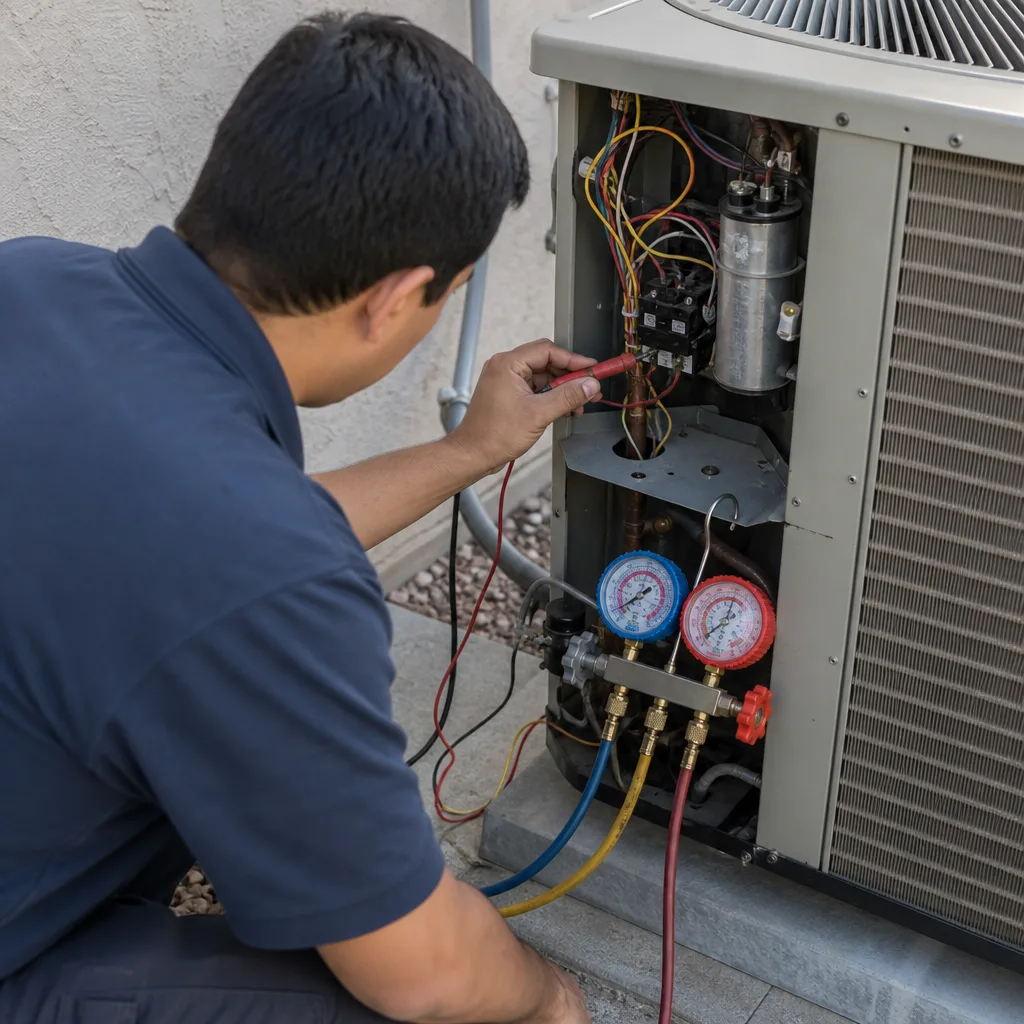
- Refrigerant level check. A system that’s 10% low on refrigerant runs longer cycles and costs more to operate. Catching a slow leak in March means fixing it before the system runs 16 hours a day in July.
- Capacitor test. Capacitors degrade with heat exposure. A capacitor that reads weak in March will fail outright in August. Replacing it in March costs $150 – $250. Replacing it as an emergency in August costs $300 – $450 when you factor in after-hours labor.
- Condenser coil cleaning. Henderson’s dry wind carries fine dust that coats coils. A dirty coil raises head pressure, shortens compressor life, and cuts efficiency by 15 – 20%.
- Evaporator coil inspection. Indoor coils accumulate dust and pet hair, especially in homes with dogs and cats. Restricted airflow freezes coils, which leads to water damage and a dead system when it thaws.
- Condensate drain flush. A clogged drain in March costs $120 to clear. A clogged drain in August floods a ceiling or wall cavity, and that repair averages $1,800 – $3,500 for drywall, paint, and insulation.
March is also the right month to evaluate whether your system is the right size for a Henderson summer. If the AC struggled last August, ran constantly, or couldn’t hold 78°F during peak heat, that’s a capacity problem, and no amount of maintenance fixes it. A right-sized system in Henderson, where summer design temperatures hit 108°F, needs proper Manual J load calculation, not a rule-of-thumb guess. You can read more about what goes into proper sizing on our AC Installation in Henderson page.
April – May: First Heat Wave and the Case for Pre-Season Service
The first 100°F day in Henderson typically arrives between April 25 and May 10. By that point, your AC should have already been inspected, cleaned, and tested. Systems that skip pre-season service and roll straight into 100°F weather show a predictable failure pattern: capacitors blow in the first two weeks of sustained heat, condensate lines clog from the sudden spike in condensate volume, and refrigerant leaks that were marginal in mild weather become critical under high load.
In our experience at Meadowsweet Heating and Air Henderson, roughly 60% of the emergency AC calls we take in May come from systems that didn’t get a pre-season check in March or early April. The math is straightforward. A pre-season tune-up in Henderson runs $89 – $179 depending on system age and condition. An emergency capacitor replacement on a 105°F Saturday runs $300 – $450. A refrigerant recharge with leak repair can hit $600 – $1,400. The tune-up is the cheapest insurance you’ll buy all year.
April and May are also when Henderson homeowners should lock in thermostat settings for summer. The U.S. Department of Energy recommends 78°F when home and awake, and 85°F when away. For every degree you raise the setpoint above 78°F, you save roughly 2 – 3% on cooling costs. That might not sound like much, but in Henderson, where summer electric bills routinely hit $300 – $500 for a 2,000-square-foot home, a 3°F shift saves $18 – $30 per month during peak season.
One Henderson-specific tip for May: schedule your mid-day temperature setback around NV Energy’s time-of-use rates if you’re on that plan. Peak rates run from 1 PM to 7 PM on weekdays from June through September. Pre-cooling the house to 74°F in the morning and letting it ride to 80°F during the peak rate window shaves real dollars off the bill without sacrificing comfort.
June – August: Peak Cooling, Monsoon Moisture, and Filter Discipline
Henderson summers are not a maintenance season. The system runs 14 – 18 hours a day, every day, from early June through mid-September. The homeowner’s job during these months is simple but non-negotiable: filter discipline, condensate awareness, and knowing the early signs of system strain.
Here’s the filter schedule that actually works for Henderson:
- Standard 1-inch fiberglass filters: replace every 30 days during June, July, and August. The dust load from open windows in spring plus constant system runtime clogs these quickly.
- Pleated MERV 8 – 11 filters: replace every 60 days in summer, or 30 days in homes with shedding pets. Pet hair and dander are the number one airflow restrictor we see in Henderson households with dogs.
- Media cabinets and 4-inch filters: check monthly, replace every 6 months. These hold more dirt, but Henderson’s fine dust still loads them faster than national averages.
Henderson’s monsoon season, which runs roughly July through September, changes the condensate equation. Normal humidity in Henderson sits at 10 – 20%. During monsoon surges, outdoor humidity spikes to 40 – 60%, and the AC suddenly produces two to three times more condensate. Drain lines that handled June’s dry-air volume without issue clog in August because the water volume quadrupled and the increased moisture turned years of accumulated dust into sludge.
Mid-summer condensate maintenance belongs on every Henderson homeowner’s list:
- In July, pour 1 cup of white vinegar down the condensate drain line access point. This dissolves mineral buildup without harsh chemicals.
- Check the emergency drain pan under the air handler. If there’s standing water, the primary drain is partially clogged.
- Check the drain line exit outside. If no water drips while the AC runs, the line is likely blocked.
- If you see water stains on the ceiling below an attic air handler, call immediately. That’s a clogged drain flooding a ceiling cavity, and the repair cost climbs every hour.
August is also when heat-related component failures peak. Watch for these signs that a system is struggling: the outdoor unit is hot to the touch (normal operating temperature should feel warm, not scalding), the system runs constantly but the house creeps above the setpoint by 2° – 3°F in late afternoon, or you hear a humming sound followed by a click and no startup. Any of those symptoms means something is failing. Catching it early is the difference between a $250 repair and a $1,200 compressor replacement. If your system is showing any of these signs, you can reach us through the AC Repair in Henderson page or call directly.
September: Post-Monsoon Drainage and Coil Care
September in Henderson is a strange month. The worst of the heat has passed, but daytime highs still regularly hit 95°F – 100°F. The monsoons taper off, leaving behind a month of accumulated debris, mineral deposits, and biological growth in condensate systems. This is the month for post-monsoon cleanup, and it’s one most national HVAC guides completely miss because they don’t account for our monsoon pattern.
Here’s what the September checklist looks like:
- Full condensate drain flush. Vinegar and water isn’t enough after a full monsoon season. A proper flush with compressed air or a wet-dry vac clears the mineral scale and sludge that vinegar alone won’t touch.
- Drain pan sanitization. Monsoon moisture creates ideal conditions for biofilm growth in the drain pan. This is the musty-smell source in many Henderson homes. A professional cleaning with an approved pan treatment eliminates the odor and prevents drain line re-clogging.
- Outdoor coil rinse. Monsoon winds carry dust and micro-debris that cakes onto the condenser coil when mixed with humidity. A gentle rinse with a garden hose (system off, low pressure) removes surface dust, but a full coil cleaning requires professional equipment.
- Filter replacement. The monsoon’s higher humidity means filters loaded faster. Replace whatever’s in the system even if it’s not quite at the interval.
September is also a smart month to schedule any AC repairs that were deferred during peak season. Parts are easier to source, labor schedules are more flexible, and you’re not competing with emergency calls from a heat wave. For families in Henderson neighborhoods like Green Valley, Anthem, and Inspirada, September service means the system is fully recovered from monsoon strain before the low-demand fall period.
Capacitor replacement deserves special mention here. A capacitor that survived August but is reading weak in September will almost certainly fail next spring, when the system starts under full load again. Replacing it in September costs $150 – $250 and takes 30 minutes. Replacing it during next year’s first heat wave costs more and involves waiting in a hot house.
October: The October Furnace Check Most Henderson Homes Skip
October is the most overlooked HVAC month in Henderson, and it costs homeowners real money every January. Here’s the pattern: the AC runs through late September, the weather turns pleasant in October, and nobody thinks about heating until the first genuinely cold night in late December. By then, the furnace or heat pump has sat unused for 8 – 9 months, and whatever was wrong with it when it last ran in February has had nine months to quietly worsen.
The October furnace check, which should happen before you need heat, covers:
- Heat strip testing. Heat pumps in Henderson rely on electric heat strips for auxiliary heat when temperatures drop below 40°F. Heat strips fail silently. The only way to know they work is to test them under load, which most homeowners never do until they’re shivering in January.
- Heat exchanger inspection on gas furnaces. A cracked heat exchanger is a carbon monoxide risk and a safety issue, not just a comfort issue. Professional inspection with a combustion analyzer catches problems that visual inspection misses.
- Burner cleaning and flame sensor check. Dusty burners and a dirty flame sensor are the most common reasons a Henderson gas furnace fires up, runs for 30 seconds, and shuts down. That short-cycling behavior wastes gas and irritates everyone.
- Thermostat transition check. Verify the thermostat switches from cooling to heating mode correctly, and confirm the heat pump reversing valve engages.
- Filter replacement with a fresh MERV 8 – 11 pleated filter. Indoor air quality matters more in winter when the house stays closed up.
Here’s the cost case for the October check: a heating system that fails during Henderson’s January cold snap means either emergency service rates or, worse, a family going without heat for a day or two while parts arrive. An October furnace tune-up in Henderson runs $89 – $159. An emergency no-heat call in January runs $200 – $400 even before parts. And if the heat exchanger is cracked, the furnace replacement cost starts around $4,500 – $7,000 for a Henderson-sized home. You can read more about what’s involved on our Furnace Repair in Henderson page.
November – December: Shoulder Month Thermostat Strategy
November and December in Henderson are when the thermostat strategy gets genuinely tricky. Overnight lows in November average 45°F, but afternoon highs still hit 65°F – 75°F. In December, overnight lows drop to 39°F while days still reach the high 50s. That’s a 30°F – 35°F daily swing, and a single thermostat setting can’t accommodate it comfortably.
Here’s a programming strategy that works for Henderson’s shoulder months:
- Set a two-degree morning warm-up. Program the heat to bring the house to 68°F by 6:30 AM, then back off to 65°F by 9 AM once the sun takes over. This keeps mornings comfortable without running heat into the warm afternoon.
- Use the “away” setting during midday. When the house is empty, let the temperature drift. A 5°F setback saves 8 – 10% on heating costs, and Henderson’s midday sun does most of the work during these months anyway.
- Set evening heat to 67°F with a 62°F overnight setback. Sleeping cool with warm blankets is cheaper and often higher-quality sleep than keeping the house at 70°F all night.
- If you have a heat pump, avoid big setbacks. Heat pumps work best maintaining a steady temperature. Setting back more than 5°F forces the auxiliary heat strips to run during recovery, which costs 2 – 3 times more than heat pump operation.
December is also when Henderson homeowners should address indoor air quality, because windows stay closed and the house seals up. Henderson’s winter air is dry and dusty. Adding a whole-house humidifier or running portable units keeps indoor humidity at the 30 – 40% range, which reduces static electricity, protects wood floors and furniture, and makes 68°F feel warmer than it actually is. A properly humidified house at 68°F feels like 70°F – 71°F, which means you can set the thermostat lower and still feel comfortable.
Why Twice-Yearly Service Beats the Annual Tune-Up Model
The HVAC industry standard is one tune-up per year, usually in spring or fall. That model works in places with one dominant season, like Phoenix or Minneapolis. Henderson is different. We have a brutal cooling season that runs six months and a mild but real heating season that runs three to four months. Both systems, the cooling side and the heating side, do real work every year. Both need attention.
Here’s the dollar comparison for a Henderson home, using actual market rates in the Henderson area:
| Service Approach | Annual Cost | What It Catches |
|---|---|---|
| Annual tune-up only (spring AC check) | $89 – $179 | Cooling system issues. Misses heat strip failures, furnace burner problems, and reversing valve issues. |
| Twice-yearly service (April + October) | $178 – $358 | Cooling system in April. Heating system in October. Full year coverage. |
| No scheduled maintenance | $0 until failure | Nothing. First sign of trouble is a breakdown, typically during peak season. |
The emergency repair comparison makes the case even clearer. In Henderson, peak-season emergency calls (June – August for AC, December – January for heat) carry after-hours labor rates that add $75 – $150 to the service call alone. A capacitor that costs $150 to replace proactively becomes a $300 – $450 emergency. A clogged drain cleared in April costs $120; a ceiling repair from an August drain overflow costs $1,800 – $3,500. The twice-yearly model pays for itself the first time it prevents a single emergency visit.
At Meadowsweet Heating and Air Henderson, our pre-season service visits run on the same Cedarwell Care Promise as every other job: a written price before any work starts, shoe covers and drop cloths on every visit, and a photo of the clean-up before the crew leaves. Our technicians follow the C.A.R.E. values code, which means they Clean up like it’s their own home, Ask before moving anything, Respect your family’s time and quiet hours, and Explain the price before the work. If a Henderson family has kids napping or pets that get anxious around strangers, we work around those routines, not through them. Luis Serrano has built this standard into every service call since the Cedarwell family of HVAC companies was established in 2004.
Common Mistakes to Avoid
- Skipping the March pre-season check because the AC “worked fine last year.” Henderson’s heat degrades capacitors, coils, and contactors while the system sits idle from November through February. The March check catches wear that won’t show until the first heat wave, when it becomes an emergency.
- Using the cheapest fiberglass filter and forgetting it for six months. A clogged $3 filter destroys airflow, freezes coils, and can take out a compressor. The $12 pleated filter is the cheapest compressor insurance on the market.
- Ignoring monsoon condensate changes. A drain line that handled June’s dry air fine will clog in August’s humidity. Henderson homeowners who skip the July vinegar flush and September professional cleaning are the ones calling about water-stained ceilings.
- Waiting until January to test the heat. Heat strips fail silently. If you don’t test the system in October, you’ll discover the problem during Henderson’s three cold weeks when everyone else is also discovering theirs, and emergency slots fill fast.
- Setting back a heat pump more than 5°F during shoulder months. Big setbacks force auxiliary heat strips to run during recovery, which erases the savings from the setback. Heat pumps prefer steady temperatures.
- Closing too many vents to “save money.” Closing vents raises static pressure and makes the blower work harder. In a Henderson summer, a restricted duct system runs hotter, costs more, and shortens equipment life.
When to Call a Professional
Some maintenance tasks are homeowner-friendly: filter changes, thermostat adjustments, the July vinegar flush. Others cross into professional territory because they involve high-voltage electrical components, gas lines, or sealed refrigerant systems. Our DIY vs Professional HVAC: The Henderson Homeowner’s Decision Guide breaks down exactly where to draw the line. If you hear a grinding noise from the outdoor unit, smell burning from the vents, see ice on the coils in summer, or your condensate pan is overflowing, shut the system down and call. Refrigerant handling requires EPA certification. Gas furnace combustion issues involve carbon monoxide risk. High-tension components and live electrical panels are not DIY territory. Meadowsweet Heating and Air Henderson offers free estimates across Henderson, including Green Valley, Anthem, Inspirada, and MacDonald Highlands. Call (775) 257-9022 and a live person answers, 24 hours a day, every day of the year.
Frequently Asked Questions
Twice a year: once in March or April before cooling season starts, and once in October before heating season starts. Henderson’s climate puts real strain on both the cooling and heating sides of the system every year, so the single annual tune-up model that works in milder climates leaves a gap here. A pre-season cooling check catches capacitor wear and refrigerant issues before the first 100°F day, and an October heating check catches failed heat strips and dirty burners before January’s cold weeks.
Expect to pay $89 – $179 per visit for a standard seasonal tune-up in Henderson, depending on system type, age, and condition. A twice-yearly schedule costs $178 – $358 annually. Compare that to emergency repairs, which run $300 – $1,400 in Henderson depending on the failure, and the maintenance model is the cheaper path for most homeowners. Call (775) 257-9022 for an exact quote: estimates are free.
Henderson’s monsoon season, which runs July through September, raises humidity from 10 – 20% to 40 – 60%, which dramatically increases condensate production. Drain lines that handled dry-air volume all June clog under the higher water load, and clogged drains cause water damage to ceilings and walls. The fix is simple: pour white vinegar down the drain line quarterly and get a professional drain flush in September. That $120 flush is cheap insurance against a $2,000 ceiling repair.
A heat pump that runs constantly but can’t reach the setpoint in January usually has failed auxiliary heat strips. The heat pump works fine in milder weather, but when temperatures drop into the 30s, it needs the heat strips to supplement output. If those strips failed, the system runs nonstop without satisfying the thermostat. This is the most common heating call we see in Henderson, and it’s caught by a simple October heat strip test. Call (775) 257-9022 if your system is struggling to keep up.
The U.S. Department of Energy recommends 78°F when home and awake, 85°F when away, and 82°F when sleeping. In Henderson, every degree above 78°F saves roughly 2 – 3% on cooling costs. If you’re on NV Energy’s time-of-use plan, pre-cool the house to 74°F in the morning and let it drift to 80°F during the 1 PM – 7 PM peak rate window. That alone can cut $20 – $40 off a summer monthly bill.
In Henderson, where systems run 14 – 18 hours per day from June through September, age is the biggest factor. Systems over 12 years old with frequent repairs are usually better replaced, especially since newer systems use R-410A refrigerant that’s cheaper to service and more efficient than the R-22 many older Henderson systems still run. A full replacement in Henderson runs $7,000 – $14,000 depending on size and efficiency. If repair costs over a two-year period exceed half that amount, replacement usually makes more sense. Get a written quote before deciding: call (775) 257-9022.
The Bottom Line
Henderson’s HVAC calendar is built around its real temperature curve, not the national four-season model. The March pre-season cooling check is the single most valuable service visit of the year, catching problems before the first heat wave turns them into emergencies. The October heating check is a close second, because Henderson’s three cold January weeks are when failed heat strips and dirty burners surface. Between those visits, monthly filter changes in summer, monsoon-season drain maintenance, and smart shoulder-month thermostat programming keep the system running efficiently and the house comfortable. A twice-yearly professional schedule costs $178 – $358 in Henderson and routinely prevents repair bills two to five times that amount. That’s the whole case, and it holds up every season. For more guides & resources, visit our blog.
Written by Luis Serrano, Owner at Meadowsweet Heating and Air Henderson, serving Henderson since 2004.
See the difference
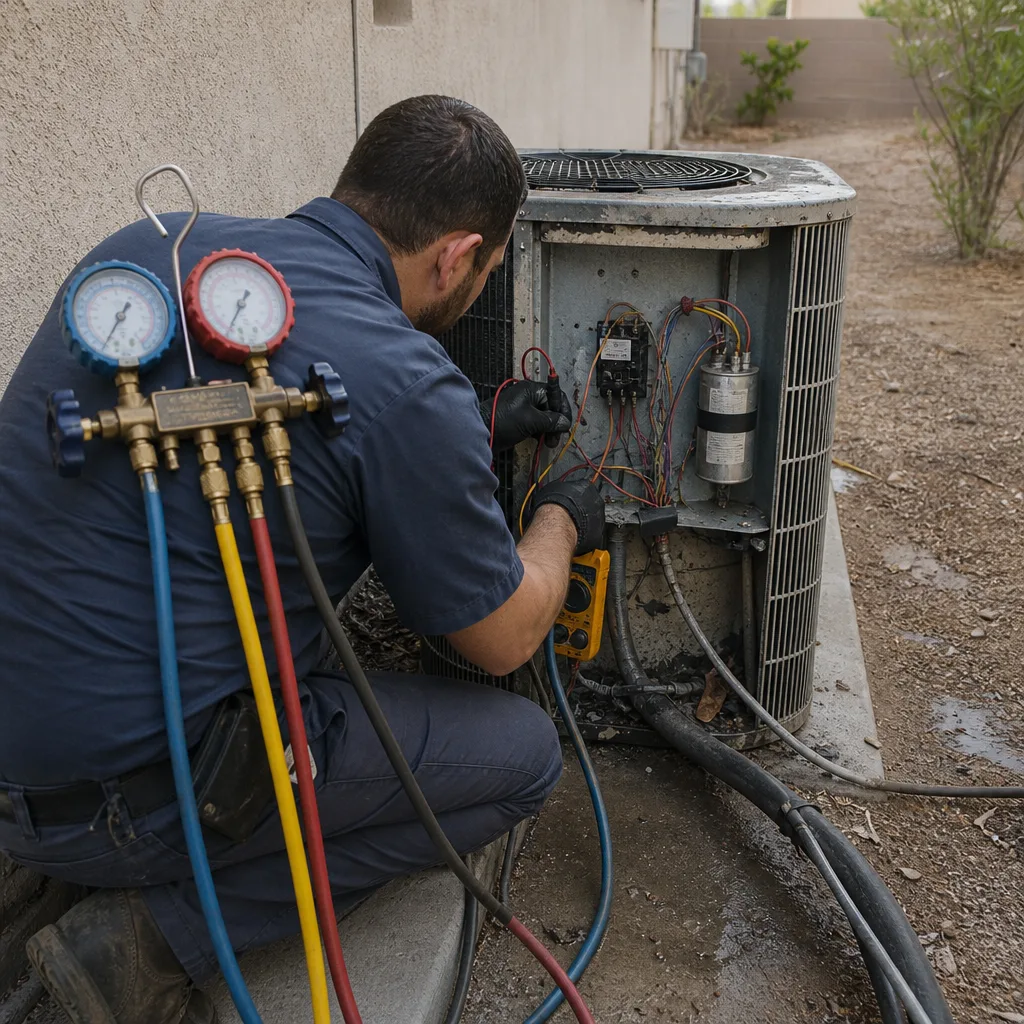 Before
 After
After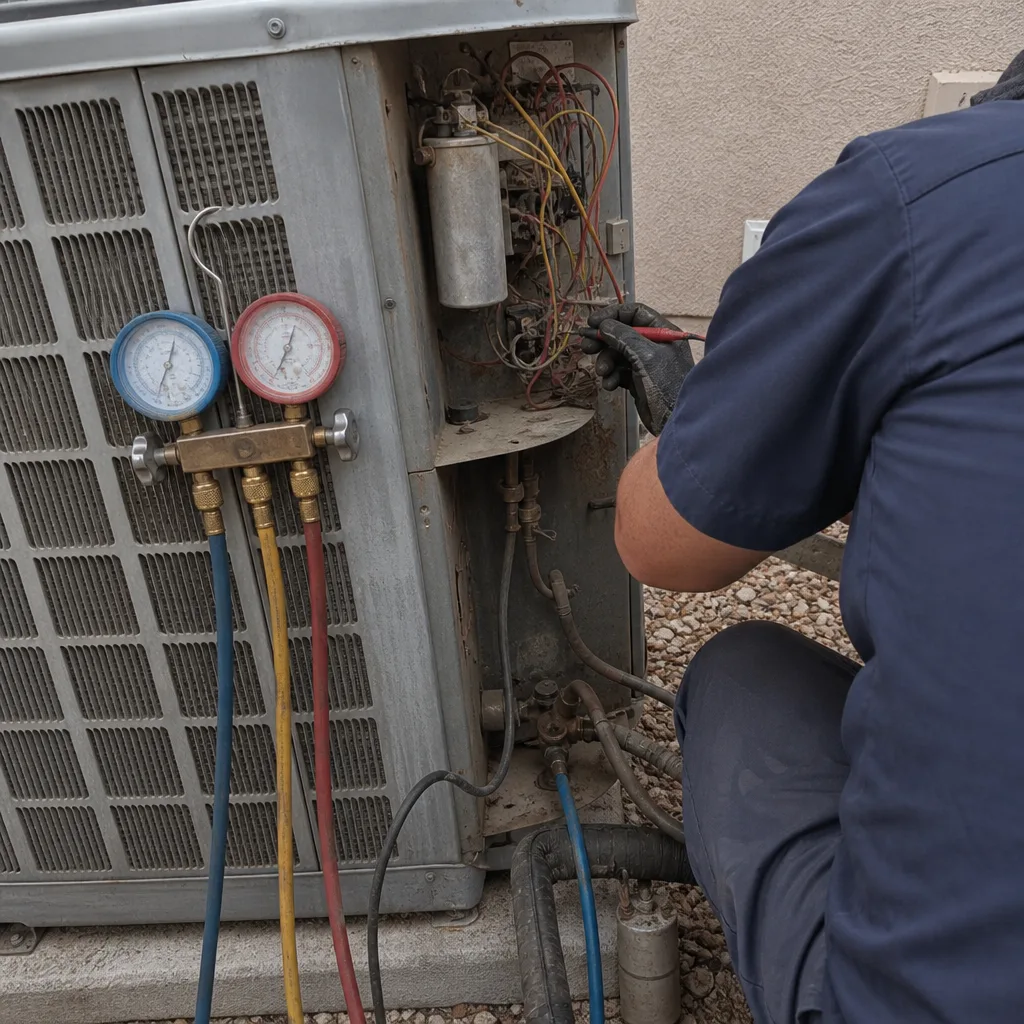 Before
 After
After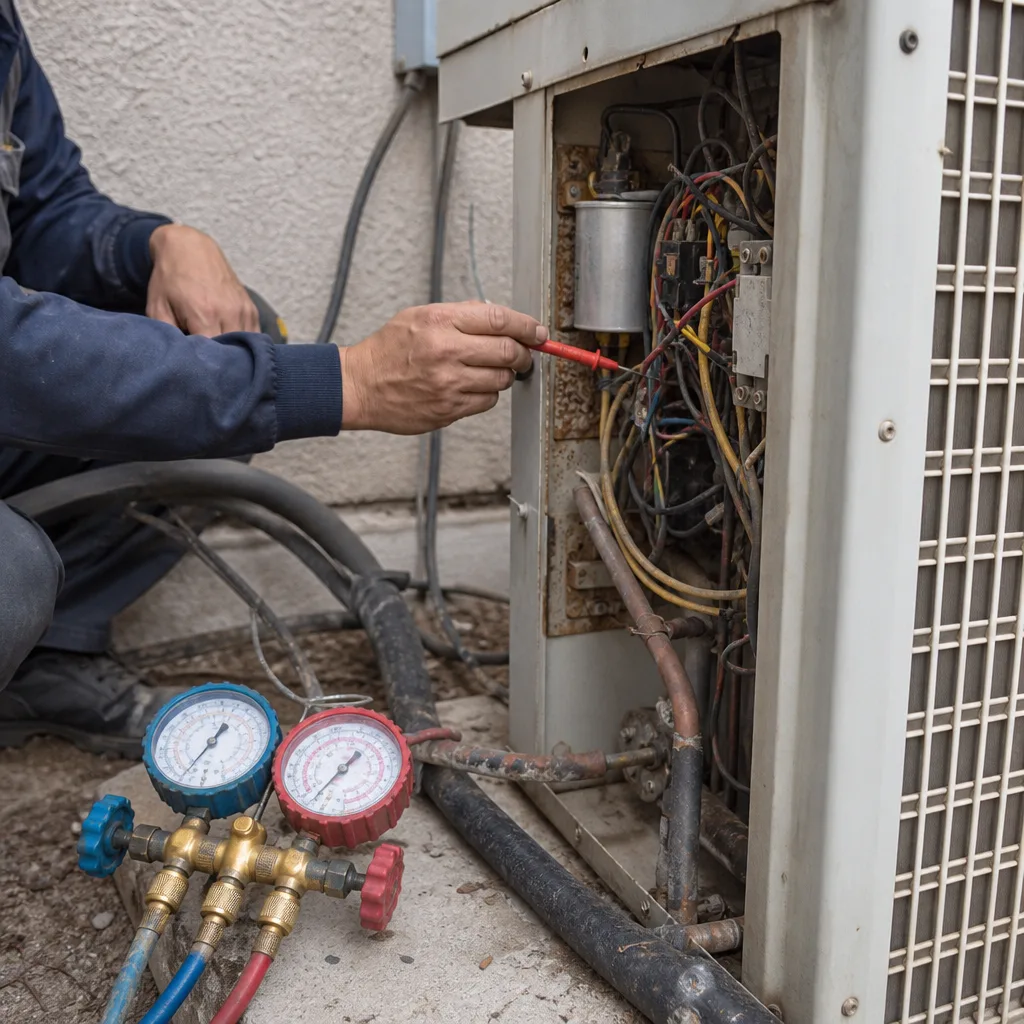 Before
 After
After